
WELCOME BONUS 300%
UP TO €2000 + 100
FREE SPINS
UP TO €2000 + 100
FREE SPINS
Home → Roulette
Roulette at Dudespin
Multipliers up to 500x Lower the Base Payout
The Quantum Roulette table by Playtech applies random multipliers of up to 500x to specific numbers before each spin, fundamentally altering the payout structure compared to standard European roulette rules. This mechanic introduces high variance, as a single winning bet can yield returns far exceeding the standard Straight payout of 35:1, creating significant swings in bankroll management for players utilizing this variant.
Standard European roulette maintains a constant house edge of 2.70% across all bets due to its 37 sectors and fixed payouts like 35:1 for Straight bets. In contrast, Quantum Roulette modifies these base payouts dynamically, meaning the theoretical return fluctuates based on the applied multipliers rather than remaining static throughout the gaming session.
The bonus terms require a wagering requirement that affects how winnings from such high-variance games are converted into withdrawable cash, impacting the overall value of the 300% welcome bonus up to €2,000 offered by the casino. Players must account for this conversion rate when evaluating the potential profit from hitting a 500x multiplier event.
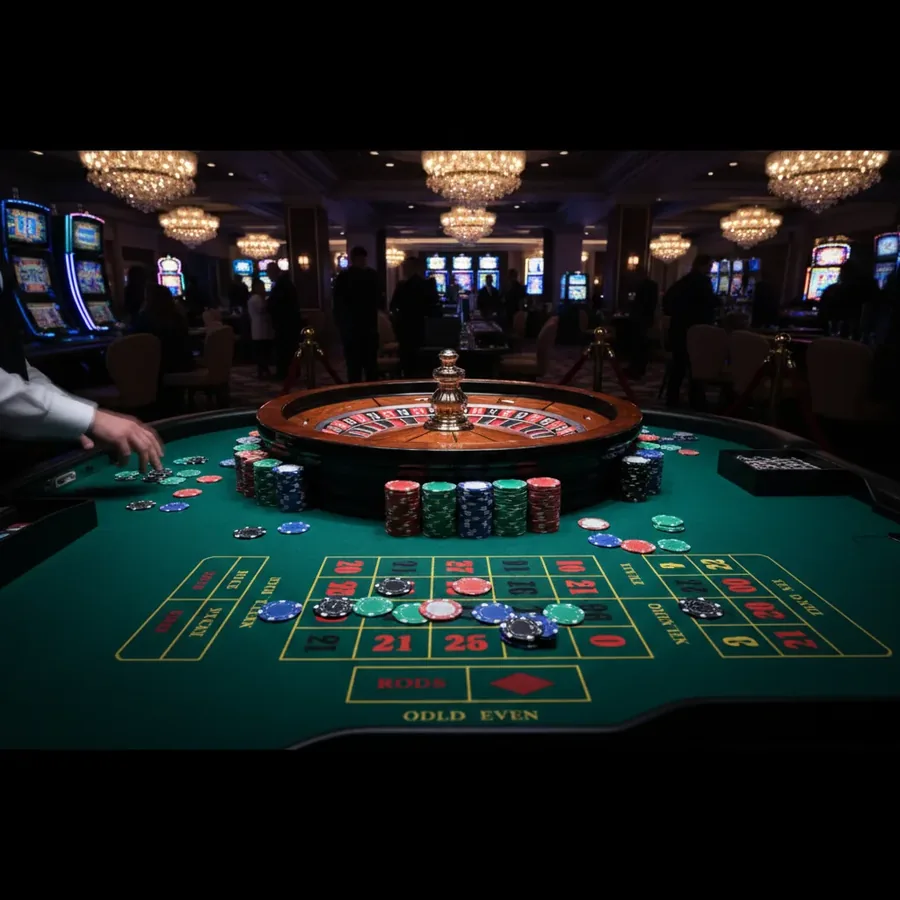
Quantum Roulette: Which Numbers Get Multipliers
Playtech’s Quantum Roulette randomly selects up to five numbers per spin to receive quantum multipliers ranging from 50x to 500x, which are displayed immediately before the dealer spins the wheel. This selection process is entirely random, ensuring that no specific number has a higher probability of being chosen than any other within the 37-sector European layout.
The standard payout for a Straight bet remains 35:1 unless a multiplier is applied, in which case the win is calculated as the stake multiplied by the straight payout ratio and then by the quantum factor. For instance, a €10 bet on a number with a 100x multiplier would result in a €3,500 win instead of the usual €350.
Unlike American Roulette which features 38 sectors including a double zero, the European wheel used here contains only 37 numbers, keeping the base house edge at 2.70%. The introduction of multipliers does not change this underlying mathematical advantage but rather increases the volatility of individual outcomes for the player.
Which Table Fits a 30 Euro Balance
Mega Fire Blaze Roulette Live by Playtech allows minimum bets starting from 0.10 EUR, making it accessible for players with a limited 30 EUR balance who wish to extend their playtime through numerous small wagers. This low entry threshold enables extensive coverage of the table without risking the entire bankroll in a single spin or round of betting activity.
Ultimate Roulette by Ezugi also supports a minimum stake of 0.10 EUR, providing similar flexibility for managing a small balance while offering unique features like multipliers up to 1,000x on selected numbers. Both tables allow players to spread their 30 EUR across dozens or columns, leveraging the 2:1 payout ratios to mitigate risk during the session.
Table games contribute only 10% toward the wagering requirements of the 300% welcome bonus, meaning that every euro wagered counts minimally against the turnover target. Consequently, a 30 EUR balance requires significantly more volume to clear the bonus conditions compared to slots, necessitating careful bankroll management to avoid depletion before meeting the criteria.
House Edge: What 2.70 Percent Actually Costs
European Roulette features a house edge of 2.70%, derived from the single zero on the 37-number wheel, which reduces the expected return to 97.30% for all standard bets including Straight, Split, and Dozen wagers. This percentage represents the long-term statistical advantage held by the casino over an infinite series of spins on this specific game variant.
In comparison, American Roulette carries a significantly higher house edge of 5.26% due to the presence of both a single zero and a double zero across its 38 sectors. This doubling of the zero pocket effectively halves the player's theoretical return, making the European version mathematically superior for preserving bankroll over extended playing sessions.
The Five Number Bet in American Roulette presents an even worse scenario with a house edge of 7.89%, as it covers five numbers (0, 00, 1, 2, 3) for a payout of only 6:1. This specific bet is considered one of the worst options on the table, offering a substantially lower return than any bet available on the European wheel.
Why the Ball Has No Memory
Each spin of the roulette wheel is an independent event, meaning previous outcomes have no influence on future results, regardless of how many times a specific color or number has appeared consecutively. This principle ensures that the probability of landing on Red or Black remains constant at approximately 48.65% on a European wheel, unaffected by historical data or streaks.
The concept of independence is crucial because some players mistakenly believe in 'due' numbers or colors, leading to flawed betting strategies that ignore the fixed 2.70% house edge. Since the wheel has no memory, systems relying on past results to predict future wins are mathematically invalid and cannot overcome the built-in casino advantage.
Even if a player experiences a long losing streak, the odds do not shift to favor a win on the next spin, maintaining the consistent RTP of 97.30% for European Roulette. This statistical reality underscores the importance of understanding variance and avoiding progressive betting systems that assume a correction of luck will occur.
Roulette bet types at a glance
| Bet | Payout | Win Chance | Numbers Covered | House Edge |
|---|---|---|---|---|
| Roulette Amerikanisch (doppelte Null, 38 Sektoren) | Straight 35:1, Split 17:1, Street 11:1, Corner 8:1, Six Line 5:1, Dozen 2:1, Column 2:1, Rot/Schwarz 1:1 | 94.74% | 38 Sektoren (1–36 + 0 + 00); Auszahlungen wie beim europäischen Rad, aber der zusätzliche Sektor verdoppelt den Hausvorteil | 5.26% |
| Roulette Französisch, innere Einsätze (La Partage gilt nicht) | Straight 35:1, Split 17:1, Street 11:1, Corner 8:1, Six Line 5:1, Dozen 2:1, Column 2:1 | 97.30% | Rad gleich (37 Sektoren), aber La Partage/En Prison gilt nicht für innere Einsätze – Edge bleibt europäisch | 2.70% |
| Roulette Amerikanisch – Five Number Bet (0, 00, 1, 2, 3) | Five Number 6:1 (deckt 5 von 38 Sektoren) | 92.11% | Einzige Wette am amerikanischen Rad mit Edge über 5,26% – „Fallenwette“. Kein Äquivalent am europäischen Rad | 7.89% |
| Roulette Französisch mit La Partage (gerade Chancen) | Rot/Schwarz 1:1 (bei 0 Rückerstattung 50%), Odd/Even 1:1, Low/High 1:1; Innere Einsätze ohne La Partage: Straight 35:1, Split 17:1, Street 11:1, Corner 8:1 | 98.65% | Bei 0 wird die Hälfte des Einsatzes auf gerade Chancen zurückerstattet (Rot/Schwarz, Pair/Impair, Manque/Passe). En Prison gibt denselben 1,35%. Regel gilt NUR für gleiche Einsätze | 1.35% |
| Roulette Europäisch (einfache Null, 37 Sektoren) | Straight 35:1, Split 17:1, Street 11:1, Corner 8:1, Six Line 5:1, Dozen 2:1, Column 2:1, Rot/Schwarz 1:1, Odd/Even 1:1, 1-18/19-36 1:1 | 97.30% | 37 Sektoren (1–36 + 0); Auszahlungen wie für 36 Sektoren – daher konstanter Edge auf ALLE Wetten | 2.70% |
Which Bets are Excluded from Bonus Wager?
The table game contribution rate is fixed at 10% for all roulette variants, including live dealer options. This low percentage means players must wager significantly more to clear the bonus requirements compared to slot games. A 100 EUR bet only counts as 10 EUR toward the turnover target. Players should calculate their total required volume based on this specific deduction rate.
The French Roulette La Partage rule applies only to even-money outside bets like Red/Black or Odd/Even. Inside bets such as Straight or Split wagers do not qualify for this refund mechanism. Consequently, the house edge remains at 2.70% for these excluded internal positions. This distinction affects the effective return and the speed of bonus clearance.
The welcome offer provides a 300% match up to 2,000 EUR plus 100 free spins. To utilize this fully, users must account for the 10% table game contribution factor. High rollers betting 5,000 EUR per spin will see only 500 EUR count toward the goal. Strategic bet sizing is essential when managing the wagering requirement under these restrictive terms.
How Long is a Betting Phase at a Live Table?
Quantum Roulette by Playtech features a betting window that allows stakes between 0.10 and 5,000 EUR. The duration is calibrated to accommodate the integration of quantum multipliers into the game flow. Players must place their initial wagers before the multiplier selection phase begins. This structure ensures fair access to the potential 500x prize opportunities available.
Mega Fire Blaze Roulette Live also operates within the standard Playtech framework with limits of 0.10 to 5,000 EUR. The betting phase concludes before the fire blaze bonus round triggers its special mechanics. Participants need to finalize their positions on the virtual layout quickly. The RTP of 97.30% reflects the long-term expectation after these phases complete.
Ultimate Roulette by Ezugi offers similar betting constraints ranging from 0.10 to 5,000 EUR per round. The dealer manages the pace, requiring bets to be placed before the wheel spin initiates. Multipliers up to 1,000x can be assigned to selected numbers during this interval. Timely placement is crucial to secure eligibility for these enhanced payout possibilities.
Wheel Speed and Ball Toss in Real Wheel
European Roulette wheels contain 37 sectors, creating a house edge of 2.70% across all bet types. The ball toss velocity determines how long the croupier waits before declaring no more bets. Faster spins may reduce the time available for complex strategic adjustments. Standard payouts like 35:1 for Straight bets remain constant regardless of wheel dynamics.
American Roulette features 38 sectors due to the additional double zero pocket. This structural change increases the house edge to 5.26% for most wagers. The ball toss behavior remains consistent with standard physics but impacts winning probabilities. Players face a higher statistical disadvantage compared to the European single-zero variant.
French Roulette introduces the La Partage rule for even-money bets, lowering the edge to 1.35%. The wheel speed does not alter the application of this favorable rule. Balls landing on zero trigger the half-refund mechanism automatically. This specific regulation improves the expected value for players betting on Red or Black.
Mobile Tables: Which Betting Fields Become Smaller
Mobile interfaces for Quantum Roulette display betting fields optimized for smaller screens while maintaining the 0.10 to 5,000 EUR range. The visual layout compresses the grid, making individual number selections slightly less prominent. Users can still access all standard payout ratios like 17:1 for Split bets. The core functionality remains intact despite the reduced graphical space allocation.
Mega Fire Blaze Roulette Live adapts its interface to show the main betting area clearly on mobile devices. The fire blaze bonus indicators are positioned to avoid obscuring critical wagering zones. Players retain full access to Dozen and Column bets paying 2:1 odds. The screen real estate prioritizes essential controls over decorative background elements.
Ultimate Roulette by Ezugi presents a streamlined betting sheet on handheld devices. The maximum stake limit of 5,000 EUR remains accessible via quick-select buttons. Number clusters are grouped logically to facilitate rapid tapping and position placement. The interface preserves the integrity of all standard roulette wagering options effectively.
Minimum and Maximum Bets Limit Every Martingale
The minimum bet of 0.10 EUR allows for extensive progression strategies without rapid capital depletion. However, the maximum limit of 5,000 EUR caps the potential recovery size in late stages. A Martingale sequence starting at 0.10 EUR reaches the table limit after twelve consecutive losses. This constraint prevents infinite doubling and forces strategy termination before full recovery.
American Roulette's Five Number Bet covers five sectors with a 6:1 payout ratio. This wager carries a steep 7.89% house edge, significantly higher than other options. The maximum bet restriction applies equally to this high-risk proposition. Players cannot use large stakes to offset the unfavorable mathematical advantage effectively.
French Roulette inner bets lack the La Partage protection, maintaining a 2.70% house edge. Straight bets pay 35:1, while Corner bets yield 8:1 returns. The betting limits apply uniformly across all interior positions on the felt. Progressive systems fail against the fixed house advantage regardless of stake scaling.
37 Pockets vs. 38 Pockets: The Difference
The American Roulette variant features a wheel with 38 sectors including a double zero, resulting in a house edge of 5.26 percent compared to the European standard. This additional pocket reduces the Return to Player rate to 94.74 percent, significantly lowering expected returns for long-term sessions at live tables. Players betting on straight numbers receive 35 to 1 payouts, yet the mathematical disadvantage remains substantially higher than on single-zero wheels.
The European Roulette configuration utilizes a wheel with only 37 sectors containing a single zero, which establishes a much lower house edge of 2.70 percent. This structural difference improves the theoretical Return to Player percentage to 97.30 percent, offering better long-term value for players engaging with live dealer games. The payout structure remains identical to the American version, but the reduced number of pockets directly decreases the casino's statistical advantage over time.
The French Roulette variant with La Partage rules applies specific protections to even-money bets, further reducing the house edge to just 1.35 percent for those wagers. When the ball lands on zero, half of the stake on Red/Black or Odd/Even is returned, effectively halving the standard European disadvantage for these specific outcomes. This rule does not apply to inner bets like Straights or Corners, which retain the full 2.70 percent edge regardless of the special refund mechanism.
How Much Budget Withstands 2.70 Percent House Edge
A starting bankroll of 100 euros subjected to the standard 2.70 percent house edge on European Roulette tables will theoretically lose 2.70 euros per hundred units wagered. This calculation assumes consistent betting on simple chances where the RTP remains stable at 97.30 percent across thousands of spins at live dealer tables. The mathematical expectation dictates that longer play sessions increase the probability of the balance converging toward this predetermined loss threshold over time.
The Quantum Roulette game by Playtech introduces multipliers up to 500x that can drastically alter short-term variance, though the underlying house edge calculations remain distinct from standard variants. Bets ranging from 0.10 to 5,000 euros allow for significant volatility management, but the frequent application of random multipliers can deplete a 100 euro budget rapidly during losing streaks. Players must account for these amplified payouts when calculating sustainable session lengths against the standard 2.70 percent theoretical deduction.
Mega Fire Blaze Roulette Live offers a bonus round with maximum wins up to 10,000 times the stake, providing potential recovery for smaller budgets facing the 2.70 percent edge. The base game maintains an RTP of 97.30 percent, ensuring that the fundamental mathematical disadvantage remains consistent despite the high-variance bonus features available to players. A 100 euro deposit requires careful stake sizing to withstand the inevitable statistical drift toward the house advantage inherent in all roulette formats.
100 Euro Bankroll: 100 Rounds Simple Chances
Betting 1 euro per spin on simple chances like Red or Black over 100 rounds involves a total turnover of 100 euros against a 2.70 percent house edge. This volume of play generates an expected loss of approximately 2.70 euros, leaving a theoretical remaining balance of 97.30 euros if no variance occurs during the session. The straight payout of 35 to 1 remains irrelevant for these low-risk wagers, which return 1 to 1 upon winning each individual spin.
Ultimate Roulette by Ezugi allows bets up to 5,000 euros and features multipliers between 50x and 1,000x that can dramatically impact the outcome of 100 rounds. While the base RTP matches the 97.30 percent standard, the introduction of these multipliers creates significant volatility that can erase a 100 euro bankroll in fewer than 100 spins. Players utilizing this table must adjust their 1-euro stake strategy to account for the potential rapid depletion caused by the enhanced multiplier mechanics.
The Five Number Bet covering 0, 00, 1, 2, and 3 carries a steep house edge of 7.89 percent, making it highly dangerous for a 100 euro budget. This wager pays 6 to 1 but covers only five out of 38 sectors on the American wheel, resulting in a significantly faster erosion of funds compared to simple chances. Engaging in 100 rounds with this bet would statistically yield a much larger loss than any other option available at the live dealer tables.
D'Alembert and Fibonacci Against the Same Table Limit
The D'Alembert system increases stakes by one unit after losses and decreases them by one unit after wins, operating within the 0.10 to 5,000 euro limits of Quantum Roulette. This progressive method attempts to recover losses gradually against the 2.70 percent house edge, but the mathematical expectation remains negative regardless of the betting sequence employed. A 100 euro bankroll can sustain many more cycles under this system than flat betting, provided the player adheres strictly to the progression rules without deviation.
The Fibonacci sequence escalates stakes based on the sum of the previous two numbers, creating steeper growth rates that can quickly exhaust a 100 euro budget at Ultimate Roulette. With multipliers reaching up to 1,000x, a single winning spin might cover several preceding losses, yet the underlying 97.30 percent RTP ensures the house retains its long-term advantage. The table limit of 5,000 euros prevents infinite progression, forcing players to reset their sequence when the bankroll cannot support the next required stake.
Both systems face the same mathematical reality: the 2.70 percent house edge on European Roulette cannot be overcome by betting patterns alone, as proven by the fixed payouts. Straight bets pay 35 to 1 while split bets pay 17 to 1, but these constants do not change the probability distribution established by the wheel layout. Players using these strategies must recognize that variance drives short-term results, while the statistical edge guarantees eventual convergence toward the expected loss over extended sessions.
Dozen 2:1 and Columns Overview
Dozen bets cover 12 numbers on the roulette wheel and pay 2 to 1, offering a balanced risk-to-reward ratio against the 2.70 percent house edge on European tables. This wager type provides a higher hit frequency than corner bets but still suffers from the same mathematical disadvantage due to the presence of the single zero pocket. Players managing a 100 euro bankroll can place multiple dozen wagers to diversify coverage, though the cumulative edge remains constant across all non-zero outcomes.
Column bets also pay 2 to 1 and cover twelve numbers arranged vertically on the layout, functioning identically to dozen bets in terms of probability and payout structure. At Quantum Roulette, these standard bets are subject to the same 0.10 to 5,000 euro limits, allowing for flexible stake adjustments based on the current bankroll status. The 500x multipliers applicable to these bets can significantly boost returns, but the base RTP of 97.30 percent dictates the long-term expectation for such wagers.
The French Roulette variant with La Partage rules refunds half the stake on even-money bets like dozens when zero appears, effectively reducing the edge to 1.35 percent for these specific outcomes. This protection does not extend to inner bets like straights or splits, which retain the full 2.70 percent disadvantage regardless of the special refund mechanism applied elsewhere. Players relying on dozen coverage benefit from this rule, as it mitigates losses on zero spins and extends the viability of a 100 euro budget over time.
Contact
Live - online chat
Banking



Providers








Dudespin 2026